
Many planning job postings mention four letters: AICP. For students and early-career planners, the credential can seem distant, but understanding it early helps you plan your education and first jobs with certification in mind. AICP certification is the planning profession's main credential, and it signals both expertise and a commitment to ethical practice.
This guide explains what AICP is, how to earn it, what the exam covers, how certified planners keep their status, and when certification makes sense in a planning career.
What Is AICP Certification?
AICP stands for the American Institute of Certified Planners, the professional institute of the American Planning Association. Planners who earn the credential may use the AICP designation after their names. Certification shows that a planner has met education and experience standards, passed a comprehensive exam, and committed to the AICP Code of Ethics and Professional Conduct.
AICP is a professional credential rather than a license. According to the U.S. Bureau of Labor Statistics, most states do not require planners to be licensed, with New Jersey as the exception. Employers may still prefer or require certification, especially for senior positions.
How to Earn AICP Certification
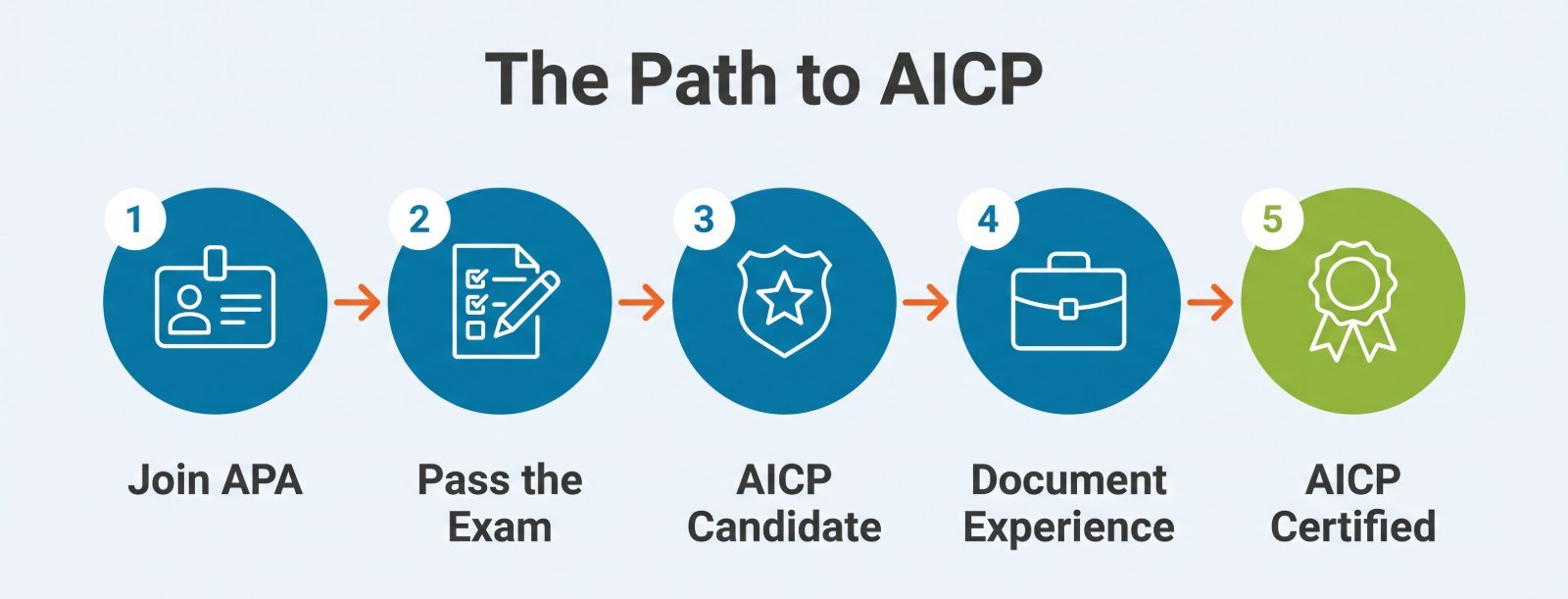
Under the American Planning Association's current process, candidates take the exam first and document their experience afterward:
- Join APA: active APA membership is the only requirement to register for the exam.
- Pass the exam: candidates who pass earn the AICP Candidate designation while they gain experience.
- Document experience: candidates then submit their education and professional planning experience for review.
- Become certified: once the experience requirement is met and approved, the planner becomes AICP certified.
The amount of experience required depends on education. A master's degree from an accredited planning program requires two years of professional planning experience, an accredited planning bachelor's degree requires three, and most other degrees require four. Our article on whether a master's in urban planning is worth it explains how that difference affects career timing.
What the AICP Exam Covers
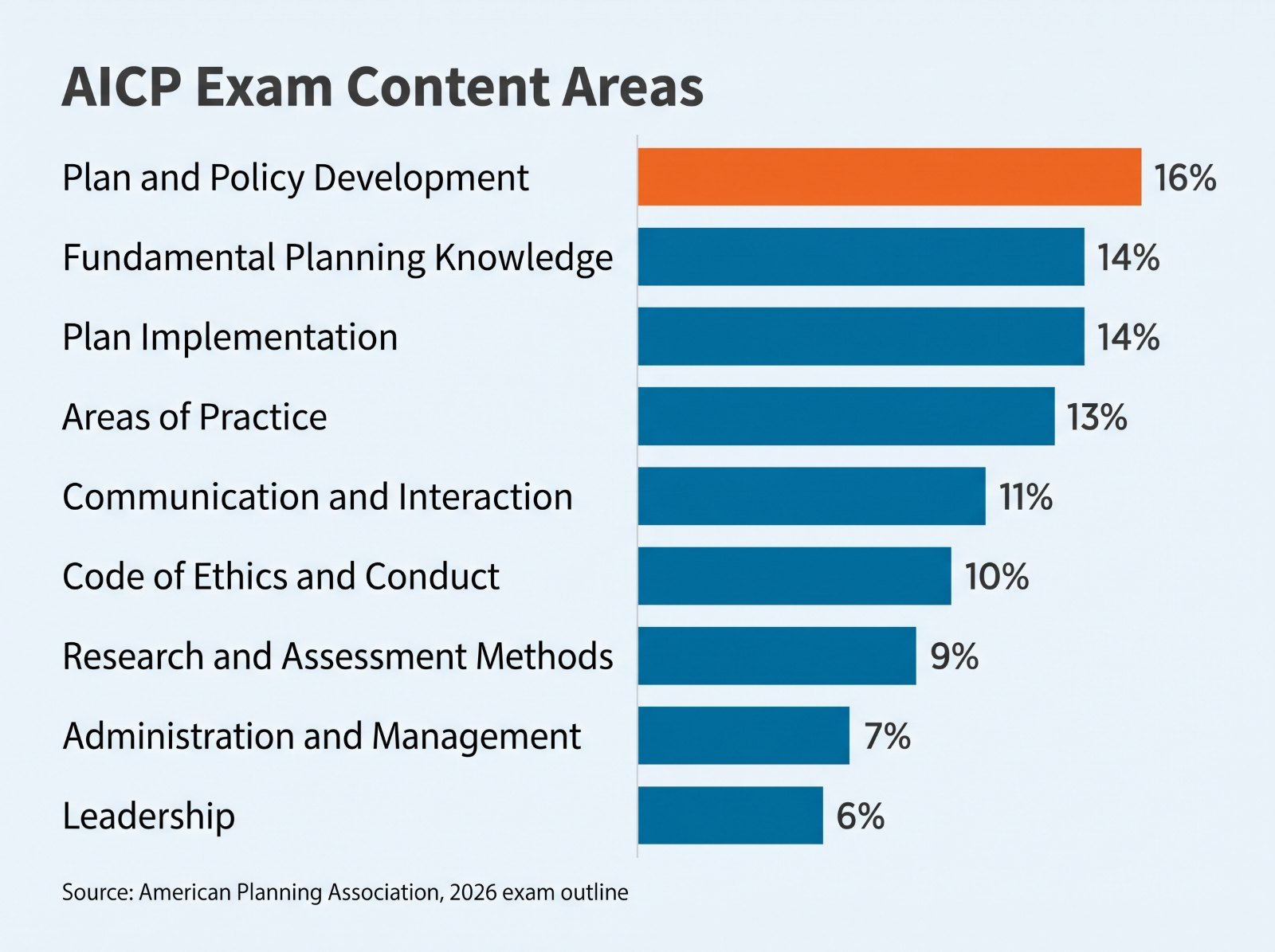
The AICP exam is a computer-based test offered during set testing windows each year. According to the American Planning Association, the exam lasts 3.5 hours and can be taken at a testing center or remotely. APA's 2026 exam outline organizes questions into nine content areas, led by plan and policy development, fundamental planning knowledge, and plan implementation. About 10 percent of the exam addresses the AICP Code of Ethics and Professional Conduct.
Most candidates prepare over several months using APA study materials, practice exams, study groups, and review sessions, which some APA chapters offer.
Keeping Your Certification Active
AICP certification requires ongoing learning. Through the Certification Maintenance program, certified planners must earn 32 continuing education credits during each two-year reporting period, including at least one credit on ethics, law, equity, or sustainability and resilience. Planners who do not meet the requirement lose their certification, so most build training, conferences, and webinars into their regular professional development.
When Should Planners Pursue AICP?

Because candidates can take the exam before completing their experience, some students and recent graduates sit for it while their coursework is still fresh, then complete the experience requirement on the job. Others wait until they have several years of practice and a clearer sense of their career direction. Planners who expect to move into supervisory or consulting roles often make certification an early priority.
Either way, certification can pay off. As our guide to urban planner salaries explains, APA survey data show that AICP-certified planners report higher average earnings than planners without certification. To learn more about the profession, read about what urban planners do, or explore schools and degree options to start your path toward a planning career.
Frequently Asked Questions
-
Can students take the AICP exam?
Yes. Under APA's current process, any APA member can register for the exam, even before earning a degree or gaining professional experience. Passing earns the AICP Candidate designation, and full certification follows once the experience requirement is met.
-
How long is the AICP exam?
The exam lasts 3.5 hours, according to the American Planning Association. It is computer-based and offered through a testing provider, with both in-person and remote options.
-
Is AICP certification required to work as a planner?
No. Many planners work without it, particularly early in their careers. However, some employers prefer or require AICP for senior, supervisory, or consulting roles, and certification can strengthen a planner's credibility with the public and elected officials.
-
How do you keep AICP certification?
Certified planners must earn 32 Certification Maintenance credits every two years, including at least one credit on ethics, law, equity, or sustainability and resilience. Credits come from courses, conferences, webinars, and other approved training.