

Urban planners help decide how communities grow: where housing goes, how streets connect, which neighborhoods get new parks, and how a town prepares for the decades ahead. The daily work behind those decisions is less visible. What does an urban planner do on an ordinary day? For most planners, the answer is a steady mix of desk work, fieldwork, and conversations with the public.
This guide follows a typical day for a public sector planner, explains the tools planners rely on, and describes how the work changes with experience and employer.
What Does an Urban Planner Do?
Urban planners develop plans and programs for how land is used, then help carry them out. According to the U.S. Bureau of Labor Statistics, planners meet with officials, developers, and the public about development and land use; gather and analyze data from field studies, market research, censuses, and environmental studies; review site plans; and recommend whether proposals should be approved. They also identify community needs and develop short- and long-term projects, from sidewalks and parks to affordable housing.
Because 74 percent of planners worked in local government in 2025, according to the bureau, the clearest picture of the job comes from a city or county planning office.
A Day in the Life of a City Planner
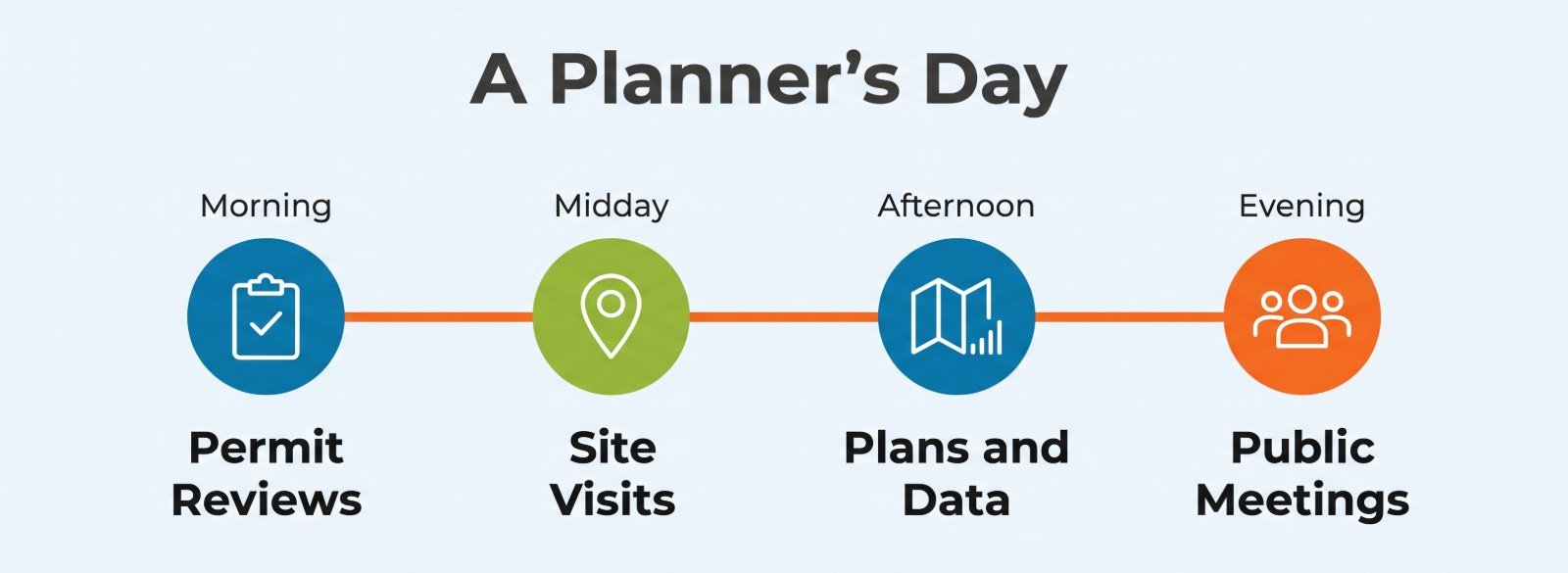
No two days are identical, but a planner's schedule often follows a recognizable rhythm:
- Morning: reviewing development applications and site plans against the zoning code, answering questions from residents and builders, and returning calls about pending projects.
- Midday: visiting sites to see how a proposal fits its surroundings, checking existing conditions, or walking a corridor that is being studied.
- Afternoon: working on longer-range projects such as a neighborhood plan, a zoning update, or a housing study, often with maps and data.
- Evening: presenting staff recommendations at a planning commission or city council meeting, or leading a community workshop.
Those evening meetings are a defining part of the profession. The Bureau of Labor Statistics notes that some planners work evenings or weekends to attend meetings with officials, planning commissions, and neighborhood groups.
Office Work and Fieldwork
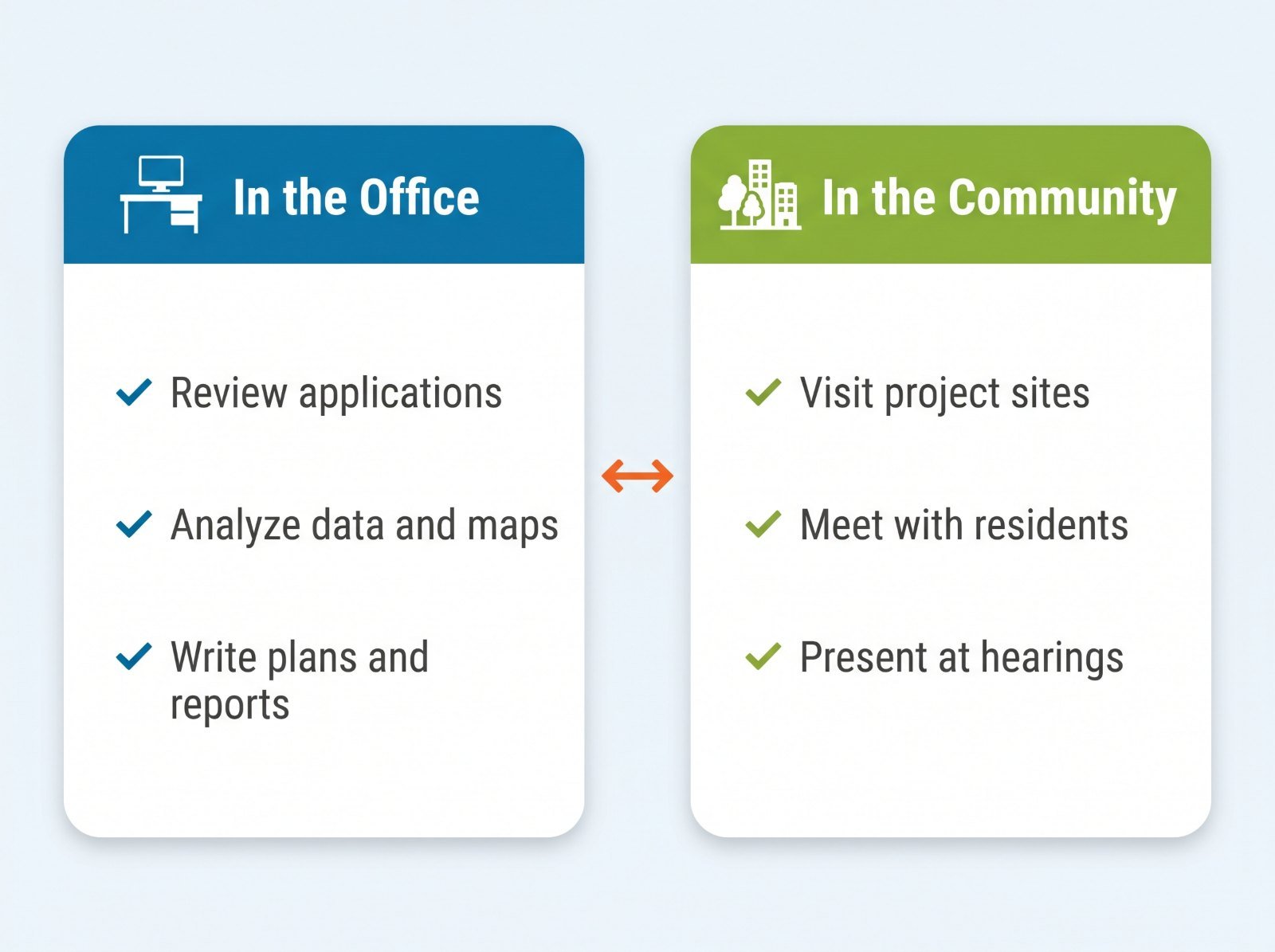
Most of a planner's time is spent in an office, but the job regularly moves outside it. In the office, planners analyze data, prepare maps, write staff reports, and draft sections of plans. In the community, they visit project sites, observe how streets and public spaces are used, and meet with residents and business owners to understand local concerns.
Balancing the two is part of what makes the work engaging. A recommendation written at a desk is stronger when the planner has seen the site and heard from the people who live nearby.
The Tools Planners Use Every Day

Planners rely on a consistent set of tools. Geographic information systems (GIS) are central: the bureau notes that planners use GIS software to map and analyze data. Zoning ordinances and comprehensive plans serve as the legal and policy framework for most decisions, and planners refer to them constantly. Census and economic data, traffic counts, and environmental studies inform recommendations, while presentation and facilitation skills help planners explain technical issues to the public and elected officials.
How the Work Changes by Role
An entry-level planner usually spends more time on application reviews, research, and public inquiries. Senior planners lead larger projects and present to decision makers more often, while planning directors manage staff and budgets. Planners at consulting firms tend to work on several clients' projects at once, and specialists in areas such as transportation or environmental planning focus more deeply on one subject.
To learn more about where planners work, read our guide to urban planning jobs, and see how students gain early experience in urban planning internships. Our overview of Careers in Urban Planning describes the profession's sectors, and you can explore schools and degree options when you are ready to compare programs.
Frequently Asked Questions
-
Do urban planners work regular hours?
Most planners work full time during standard business hours. However, public meetings are often held in the evening so residents can attend, so many planners in government regularly work some evenings, and occasionally weekends, throughout the month.
-
How much of an urban planner's job is spent outdoors?
Usually a modest share. Planners spend most of their time in an office, with periodic site visits, field surveys, and community events. Planners working on transportation, parks, or environmental projects may spend more time in the field.
-
What skills does a city planner use most?
Clear writing, data analysis, mapping, and public communication are used nearly every day. Planners also need a working knowledge of zoning and land use law, along with the judgment to balance competing interests when making recommendations.
-
Is being an urban planner stressful?
It can be at times, particularly when proposals are controversial or deadlines cluster around public hearings. Many planners find the work rewarding because they can see the results of their efforts in the communities they serve.