

For many students weighing a career in urban planning, the first practical question is a fair one: can this work support the life I want? The short answer is yes. Urban planning offers solid, middle-class pay from the start of a career, and earnings tend to rise steadily with experience, credentials, and responsibility.
The full answer is more useful, because planner pay is not one number. It depends on where you work, what sector you work in, and how your career develops. This guide explains what urban planners earn today, why salaries vary, and which choices tend to move pay upward over time.
How Much Does an Urban Planner Make?
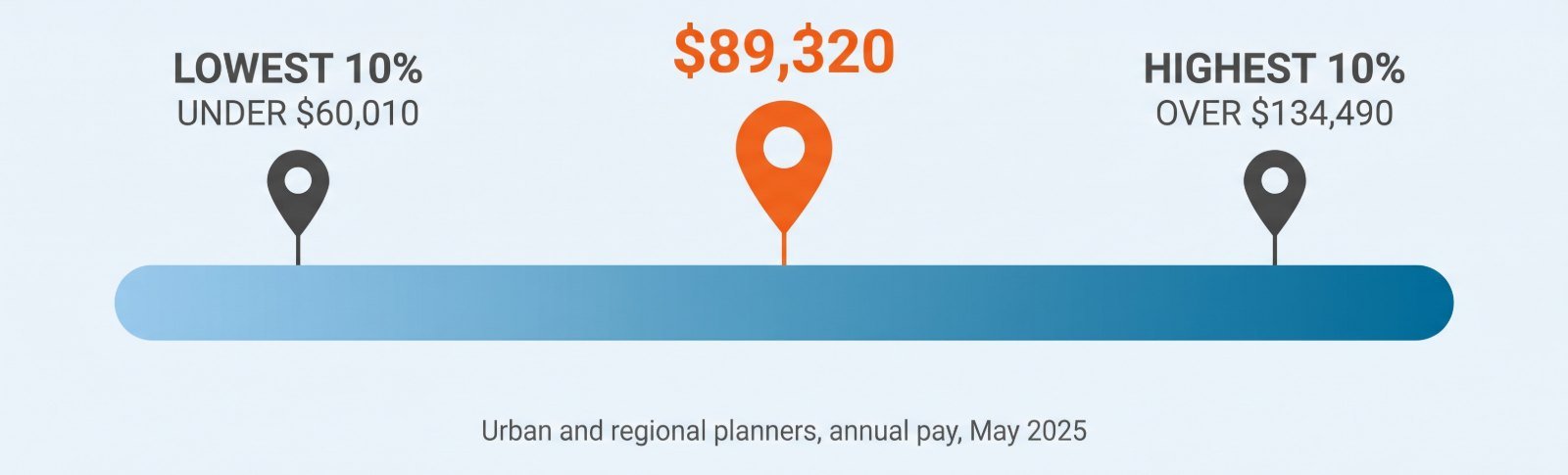
According to the U.S. Bureau of Labor Statistics, the median annual wage for urban and regional planners was $89,320 in May 2025, or about $42.94 per hour. Half of all planners earned more than that figure, and half earned less.
The range around that midpoint is wide. The lowest-paid 10 percent of planners earned less than $60,010, while the highest-paid 10 percent earned more than $134,490. That spread largely reflects the distance between an early-career planning position and a senior or leadership role.
Why City Planner Salaries Vary
Several factors shape what a city planner earns, and they often work together:
- Sector: Most planners work in the public sector, where about 74 percent are employed by local governments. Federal data show median pay of $85,980 in local government, $91,060 in state government, and $102,740 in architecture, engineering, and related consulting firms.
- Location: Large metropolitan regions and high-cost areas generally pay more than smaller communities, although living costs often rise alongside wages.
- Responsibility: Pay increases as planners move from preparing reports and reviewing applications to managing projects, supervising staff, and advising elected officials.
- Credentials: A professional master's degree is the typical entry-level education for the field, and professional certification can add measurably to earnings.
The sector difference is worth understanding rather than simply chasing. Private consulting tends to pay more, while public agencies often offer stronger retirement benefits, greater job stability, and work that connects directly to the community a planner serves.
How Planner Pay Grows Over a Career
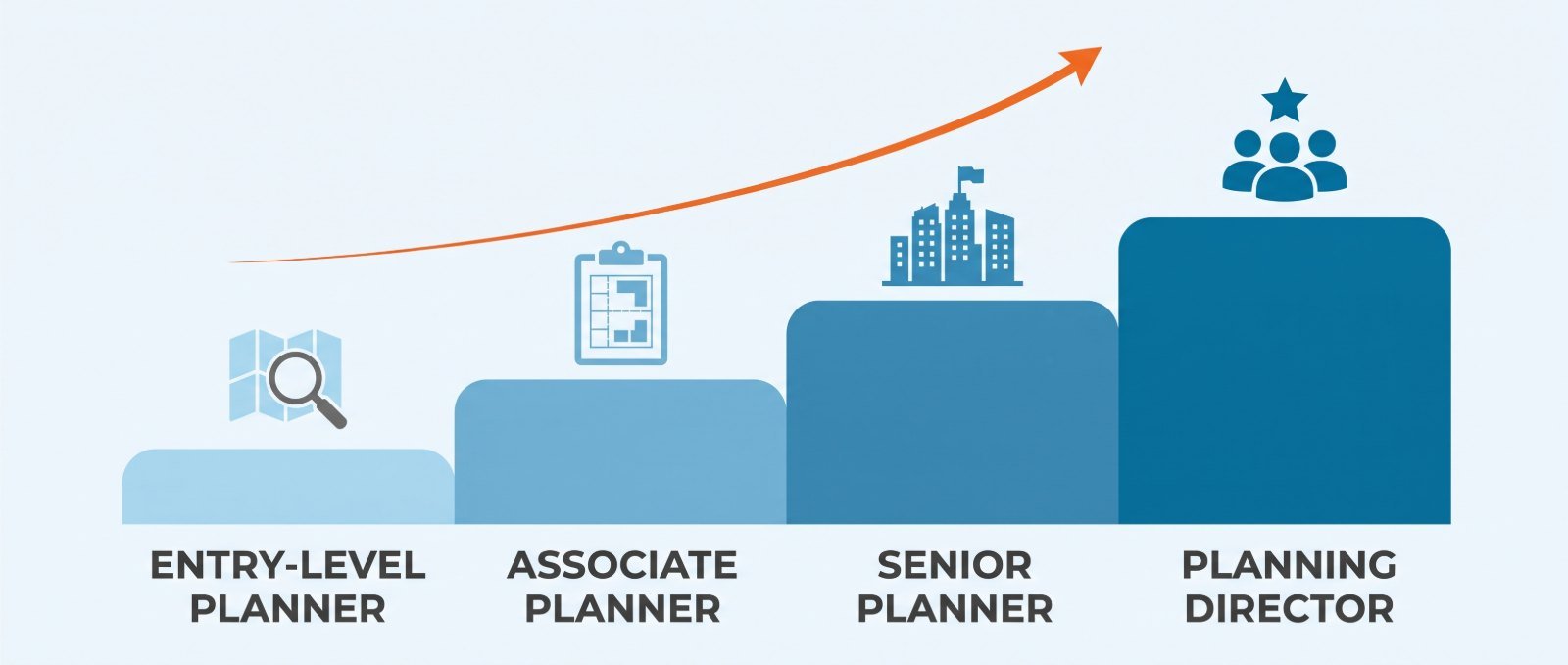
Planning careers usually follow a recognizable path. Many graduates begin as assistant or entry-level planners, reviewing site plans, researching zoning questions, and supporting public meetings. With several years of experience, planners take on larger projects as associate or senior planners, often leading comprehensive plans, transportation studies, or neighborhood initiatives.
From there, some planners move into management as planning managers or directors, overseeing departments and budgets. Others build specialized expertise in areas such as transportation, environmental planning, housing, or geographic information systems. Both paths can lead toward the upper end of the salary range. Our overview of Careers in Urban Planning describes the kinds of roles planners hold across the public, private, and nonprofit sectors.
Does AICP Certification Raise Planner Pay?
For many planners, it does. The American Institute of Certified Planners (AICP) credential is the profession's main certification, earned through education, professional experience, and an exam. In the American Planning Association's 2025 salary survey of nearly 6,400 planners, certified respondents reported earning about 31 percent more, on average, than those without certification. The gap narrowed as experience increased, but certified planners reported higher median pay at every experience level.
Weighing Pay Against the Work Itself

Salary matters, but it is only part of a sound career decision. Federal projections call for employment of urban and regional planners to grow about 4 percent from 2025 to 2035, with roughly 3,200 openings expected each year. For people drawn to housing, transportation, climate resilience, and public life, planning offers the combination of steady demand and meaningful work that many careers lack.
If you are just beginning to explore the field, start with What Is Urban Planning? and our Overview of Programs, which explains the bachelor's, master's, and certificate options available. When you are ready to compare programs side by side, you can explore schools and degree options across the United States and Canada.
Frequently Asked Questions
-
How much does an urban planner make per hour?
The median hourly wage for urban and regional planners was about $42.94 in May 2025, according to the U.S. Bureau of Labor Statistics. Most planners are salaried and work full time, so hourly figures are mainly useful for comparing planning with other careers.
-
Do urban planners make more in the private sector?
Often, yes. Planners at architecture, engineering, and consulting firms reported a median wage of $102,740 in May 2025, compared with $85,980 in local government. Public positions, however, frequently offer pensions, stable schedules, and strong benefits that narrow the difference in total compensation.
-
What do entry-level urban planners earn?
Starting pay varies widely by region and employer. As a rough guide, the lowest-paid 10 percent of planners earned less than $60,010 in May 2025, a group that includes many people in their first planning jobs. Internships and graduate study can help new planners begin at a higher level.
-
Is urban planning a good career financially?
For most people, it is a stable, well-paid profession rather than a path to exceptional wealth. Median pay is above the national median for all occupations, demand is projected to grow, and earnings rise with experience, certification, and leadership responsibility.