

Students drawn to urban planning often picture one job: a planner in a city office reviewing maps and development proposals. That job is real and common, but it is only part of the picture. Urban planning jobs span local and state government, regional agencies, private consulting firms, and nonprofit organizations, and they cover specialties from transportation to housing to disaster recovery.
This guide explains where planners work, what they do in different settings, and how new graduates typically find their first planning job. Understanding the field early can help you choose coursework, internships, and a degree program that fit the career you want.
Where Do Urban Planners Work?
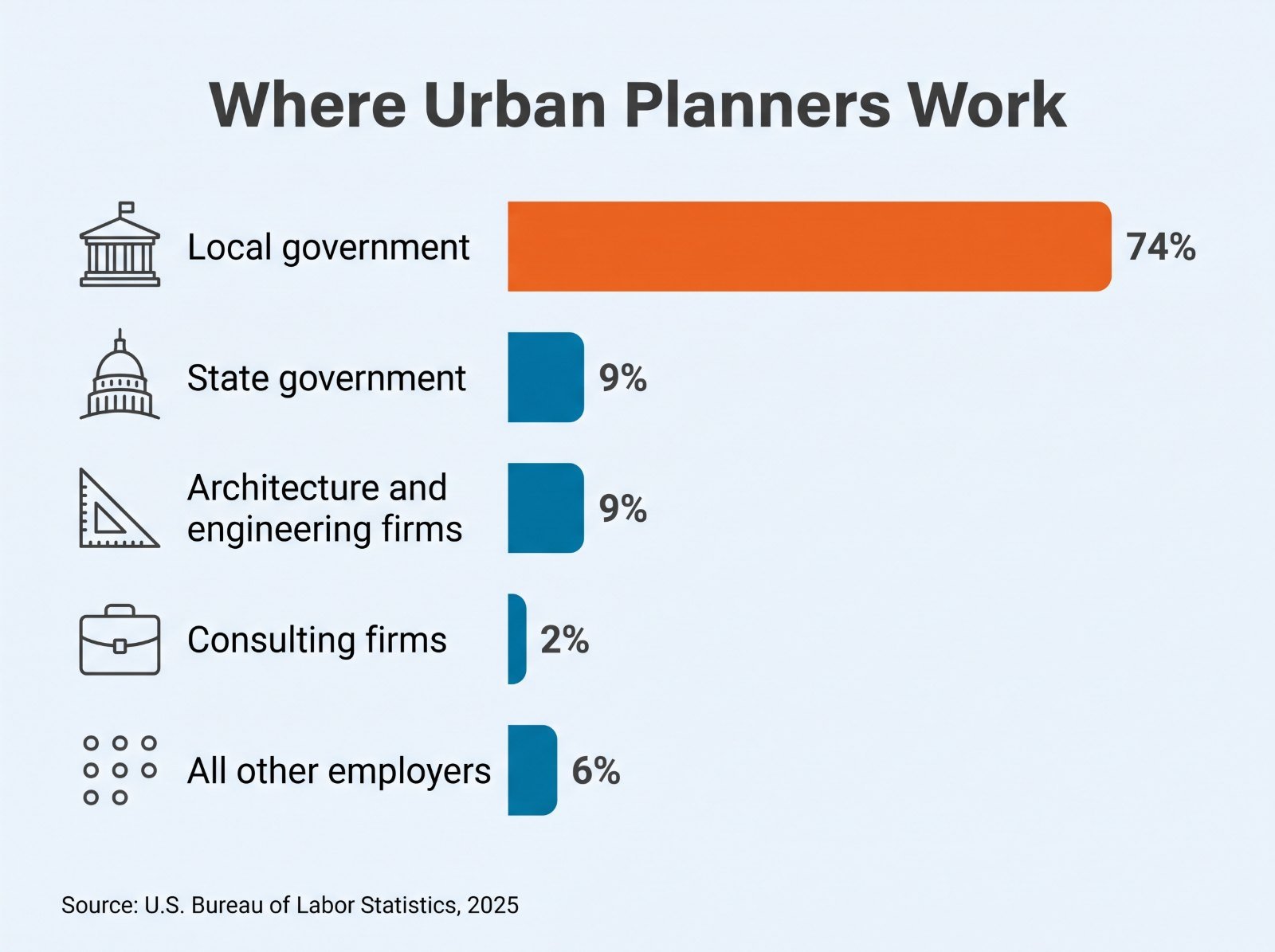
Most urban planning jobs are in the public sector. According to the U.S. Bureau of Labor Statistics, urban and regional planners held about 45,800 jobs in 2025, and 74 percent were in local government. State governments and architectural, engineering, and related services firms each employed 9 percent, and management, scientific, and technical consulting firms employed 2 percent.
Those figures describe the core occupation, but planning work reaches further. The Association of Collegiate Schools of Planning notes that planners work in government, with nonprofit agencies, and in private industry, and that public positions include regional planning agencies and federal agencies as well as city and county departments.
Jobs in Local and Regional Government
City and county planning departments are the most common starting point for a planning career. Staff in these offices review site plans and development applications, interpret zoning ordinances, prepare comprehensive plans, and present recommendations to planning commissions and elected officials. Regional planning organizations, including the metropolitan planning organizations that coordinate transportation funding, address issues that cross municipal lines, such as transit, growth, and water resources.
Public sector work puts planners in regular contact with the people their decisions affect. The Bureau of Labor Statistics notes that some planners work evenings or weekends to attend meetings with officials, planning commissions, and neighborhood groups.
Planning Jobs in Private Firms and Nonprofits

In the private sector, planners often work for engineering, architecture, and consulting firms that public agencies hire to prepare plans, studies, and environmental reviews. Others work for developers, guiding projects through zoning and permitting. Consulting typically involves several clients and projects at once, which offers variety and exposure to many kinds of communities.
Nonprofit planners work for community development corporations, housing organizations, conservation groups, and advocacy organizations. These positions usually center on a single mission, such as affordable housing or neighborhood revitalization, and often involve grant writing and close partnerships with residents.
Common Urban Planner Job Titles and Specialties
Job titles vary by employer, but several appear frequently in postings for urban planner jobs:
- Planning technician or assistant planner: an entry-level role focused on research, mapping, permit review, and public inquiries.
- Associate or senior planner: a role that leads projects such as neighborhood plans, code updates, or major development reviews.
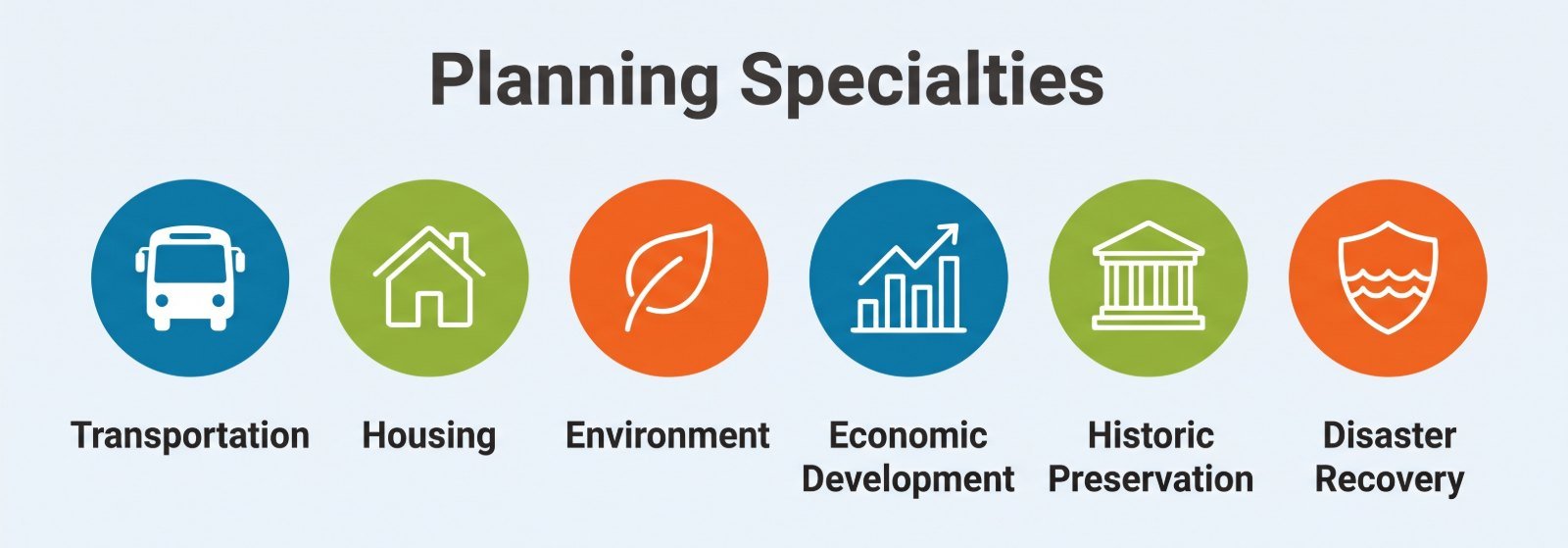
- Specialist planner: a position devoted to one area, such as transportation, housing, environmental planning, or historic preservation.
- GIS analyst: a technical role that builds the maps and spatial data behind planning decisions.
- Planning manager or director: a leadership role overseeing a department, its budget, and its staff.
The American Planning Association identifies specializations that include economic development, environmental and natural resources planning, food systems, hazard mitigation and disaster recovery, historic preservation, housing, and transportation. Some planners remain in one specialty for an entire career, while others move between specialties or hold roles that combine several.
How to Land an Entry-Level Urban Planning Job
Most planners begin with formal education in the field. According to the Bureau of Labor Statistics, planners typically need a bachelor's or master's degree from an accredited planning program, and most hold a master's degree in urban and regional planning or a related field. Some entry-level positions also require related experience, which internships can provide.
Demand is steady. The bureau projects about 3,200 openings for urban and regional planners each year from 2025 to 2035, most of them created as planners retire or change careers. Pay also varies by sector, as our guide to urban planner salaries explains.
To learn more about the profession, read Careers in Urban Planning and What Is Urban Planning? When you are ready to compare degree options, you can explore schools and degree options across the United States and Canada.
Frequently Asked Questions
-
Can urban planners work remotely?
Some can, at least part of the time. Research, mapping, and report writing can often be done from anywhere, and some consulting firms and public agencies offer hybrid schedules. Most planning jobs still involve site visits and public meetings, so fully remote positions are less common than hybrid ones.
-
Do you need a license to work as an urban planner?
In most states, no. New Jersey is the exception, licensing professional planners through its State Board of Professional Planners. Elsewhere, employers may prefer or require professional certification, most often AICP, which planners can pursue after gaining education and experience.
-
Can you get an urban planning job without a planning degree?
It is possible, particularly in technical roles such as GIS analysis or for candidates with backgrounds in architecture, public policy, or economic development. Even so, the Bureau of Labor Statistics reports that most planners hold a master's degree in urban and regional planning or a related field.
-
What does an entry-level urban planner do day to day?
A typical first job combines desk work and public contact: reviewing permit and site plan applications against zoning rules, answering questions from residents and developers, collecting and mapping data, and preparing staff reports for planning commission meetings.