

For many students, an internship is the moment urban planning stops being a subject and becomes a profession. Urban planning internships place students inside planning departments, consulting firms, and community organizations, where they work on real projects alongside practicing planners. That experience often matters as much as coursework when it is time to apply for a first job.
This guide explains what an urban planning internship involves, what interns typically do, how and when to find one, and how to turn the experience into the start of a planning career.
What Is an Urban Planning Internship?
An urban planning internship is a short-term, supervised position in which a student or recent graduate does professional planning work. Many internships run full time over a summer, while others are part time during the academic year. Some degree programs require an internship or professional practice experience, and our Frequently Asked Questions page explains how those requirements typically work.
Because most planners work in the public sector, many internships are with city, county, and regional planning agencies. According to the U.S. Bureau of Labor Statistics, 74 percent of urban and regional planners worked in local government in 2025. Engineering and consulting firms, state agencies, transit authorities, and nonprofit organizations also host interns.
What Does an Urban Planning Intern Do?
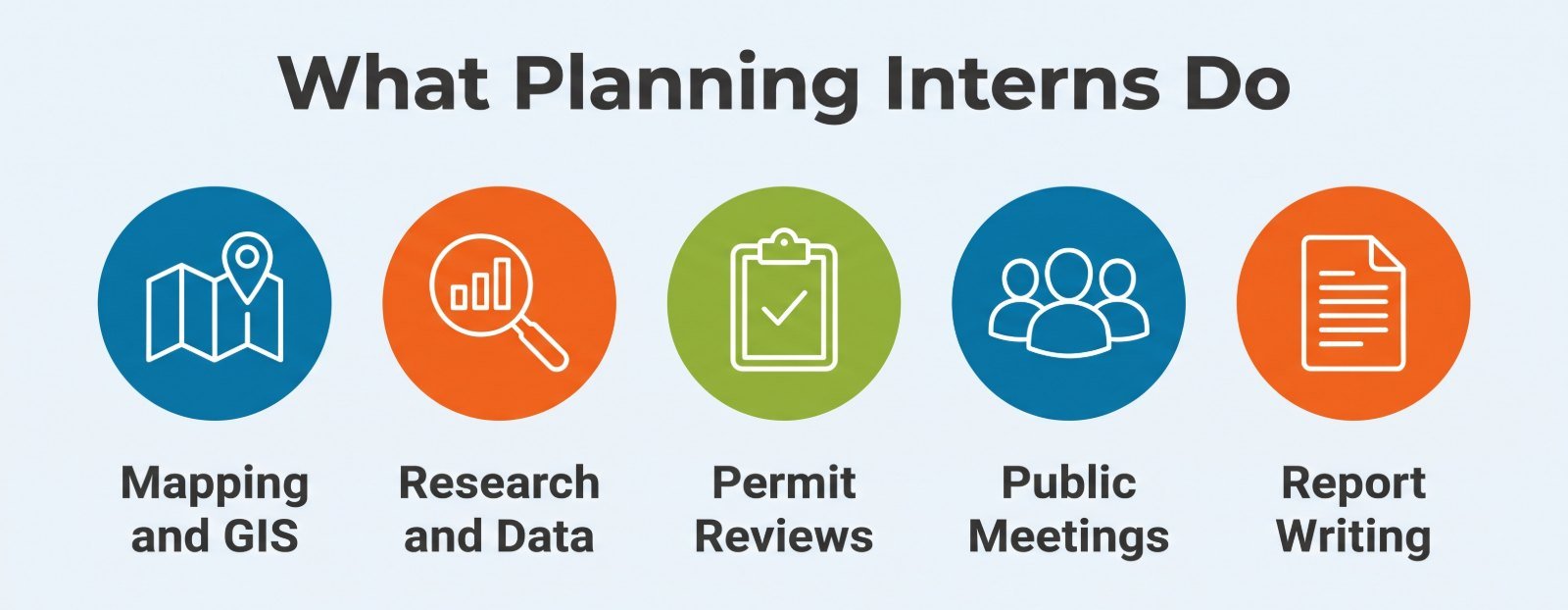
An urban planning intern supports the daily work of a planning office while learning how decisions are made. Common assignments include:
- Mapping and GIS: creating maps and updating spatial data on land use, zoning, and transportation.
- Research and data analysis: gathering census figures, housing data, and examples of policies used in other communities.
- Permit and site plan review: checking applications against zoning requirements under a planner's supervision.
- Public engagement: helping prepare for community meetings, workshops, and public hearings.
- Writing: drafting staff reports, memos, and sections of larger plans.
The mix depends on the employer. An intern at a consulting firm may contribute to several clients' plans in one summer, while an intern in a small city office may see the full range of a department's work.
When and How to Find Urban Planning Internships

Start early. Many summer internships open applications in the fall or winter before, and public agencies often follow formal hiring calendars with fixed deadlines. Check the websites of local, regional, and state planning agencies directly, since many public internships are posted only on government job portals.
Professional networks help as well. The American Planning Association maintains APA Jobs Online, a job board for the profession, and its state chapters host events where students can meet practicing planners. Your program's career services office and faculty advisors are also valuable sources of leads. A short portfolio with mapping samples, a writing sample, and a resume that highlights relevant coursework will strengthen any application.
Paid and Unpaid Internships
Pay varies by employer and region, so weigh compensation carefully before accepting an offer. National research suggests that paid experience can make a difference. In the National Association of Colleges and Employers' 2024 Student Survey, more than two-thirds of graduating seniors reported completing an internship, and 57 percent of interns were paid. On average, paid interns received more job offers before graduation and higher starting salaries than unpaid interns and students without internships.
Turning an Internship Into a Planning Career

An internship is also an extended introduction to potential employers and references. According to the Bureau of Labor Statistics, some entry-level planning jobs require related experience, and internships are a common way to gain it. Ask for assignments that produce work samples, keep track of the projects you contribute to, and stay in touch with your supervisors after the internship ends.
To see where that experience can lead, read our overview of urban planning jobs and where planners work and our guide to urban planner salaries. When you are ready to compare degree programs, you can explore schools and degree options across the United States and Canada.
Frequently Asked Questions
-
How long does an urban planning internship last?
Many run for a single summer of full-time work. Others are part time during the fall or spring semester, and some agencies offer longer positions that continue through the school year. The posting will usually state the expected hours and duration.
-
Do you need GIS skills to get an urban planning internship?
Not always, but GIS experience makes an applicant more competitive because mapping is among the most common intern tasks. Many students gain basic GIS skills through an introductory course before applying, then build on them during the internship.
-
Can students in other majors apply for urban planning internships?
Yes. Students in geography, public policy, environmental studies, architecture, and related fields often intern in planning offices. An internship can be an effective way to test interest in the field before applying to a planning degree program.
-
Are remote urban planning internships available?
Some are, particularly for research, mapping, and data roles, and some employers offer hybrid arrangements. Most planning internships still include in-person work, because site visits and public meetings are a core part of learning the profession.