
Cities are growing, and the choices planners make today will shape how people live, travel, and cope with a changing climate for generations. Sustainable urban planning is the practice of making those choices with long-term environmental, economic, and social health in mind. For students considering a planning career, it is one of the most active and rewarding areas of the field.
This guide explains what sustainable urban planning is, why it matters, the key ideas planners use, and how students can build a career around this work.
What Is Sustainable Urban Planning?
Sustainable urban planning is an approach to shaping cities and towns that meets present needs without undermining the ability of future residents to meet theirs. In practice, it means planning land use, transportation, housing, and infrastructure so that communities use land and resources efficiently, reduce pollution and greenhouse gas emissions, protect natural areas, and remain affordable and livable for people of different incomes and ages.
Sustainability in planning is often described as balancing three goals: a healthy environment, a strong economy, and fair access to opportunity. A plan that excels at one goal while neglecting the others is rarely sustainable in the long run.
Why Sustainability Matters in Planning
Urban growth raises the stakes. In its 2018 World Urbanization Prospects, the United Nations projected that 68 percent of the world's population will live in urban areas by 2050. Decisions about where that growth goes, and how people move through it, influence air and water quality, energy use, public health, and household costs.
The U.S. Environmental Protection Agency describes smart growth as an overall approach to development and conservation that can help protect health and the natural environment and make communities more attractive, economically stronger, and more resilient to climate change. According to the EPA, development guided by smart growth principles can reduce air and water pollution and greenhouse gas emissions, conserve resources, and preserve environmentally sensitive land.
Key Ideas in Sustainable Urban Planning
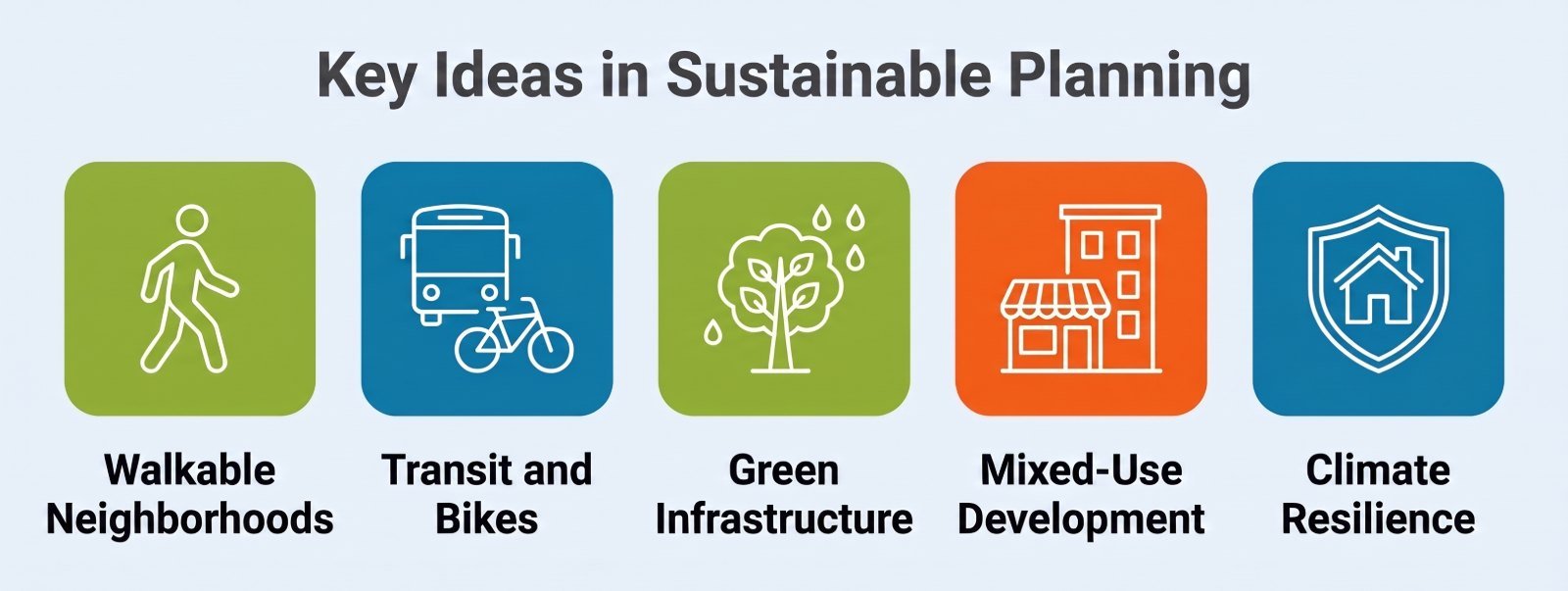
Sustainable planning draws on a set of well-established ideas, many of which appear among the EPA's smart growth principles:
- Walkable neighborhoods: placing homes, schools, shops, and parks close enough together that daily trips can be made on foot.
- Transportation choices: investing in transit, bike networks, and safe streets so that driving is one option among several.
- Mixed land uses: allowing housing, offices, and retail to share neighborhoods and even buildings, which shortens trips and supports local business.
- Compact development: directing growth toward existing communities and infrastructure rather than undeveloped land.
- A range of housing choices: planning for different home types and price points so that people can live near work and services.
Green Infrastructure and Climate Resilience
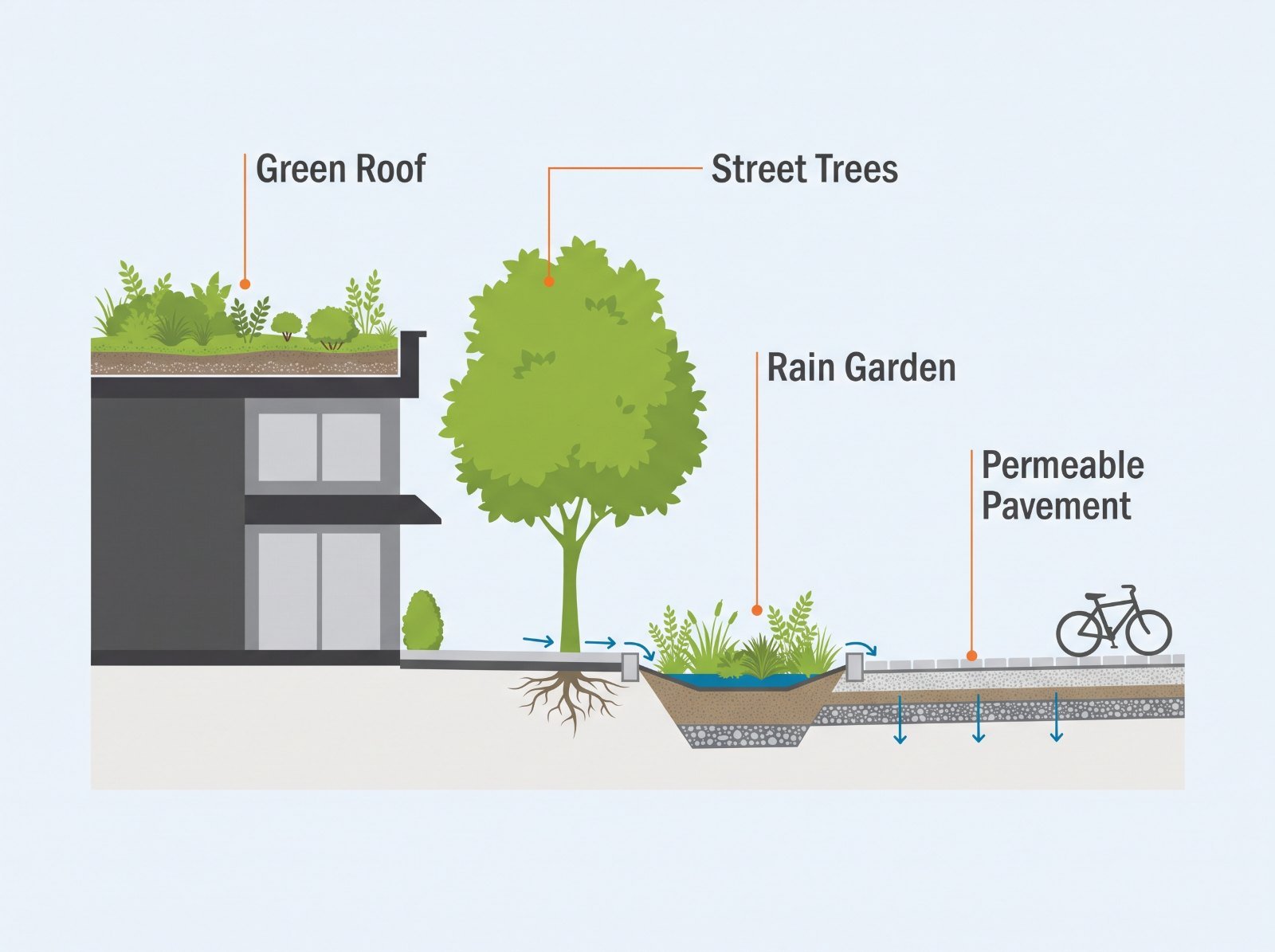
Green infrastructure uses plants, soil, and natural processes to manage stormwater and cool urban areas. Common examples include street trees, rain gardens, green roofs, and permeable pavement, which allow rainwater to soak into the ground instead of overwhelming storm sewers. These features also provide shade and habitat and make streets more pleasant.
Climate resilience extends the same thinking to future risks. Planners assess exposure to flooding, extreme heat, and other hazards, then use zoning, building standards, open space protection, and capital investments to reduce that risk before disasters occur.
Sustainable Urban Planning Ideas in Practice
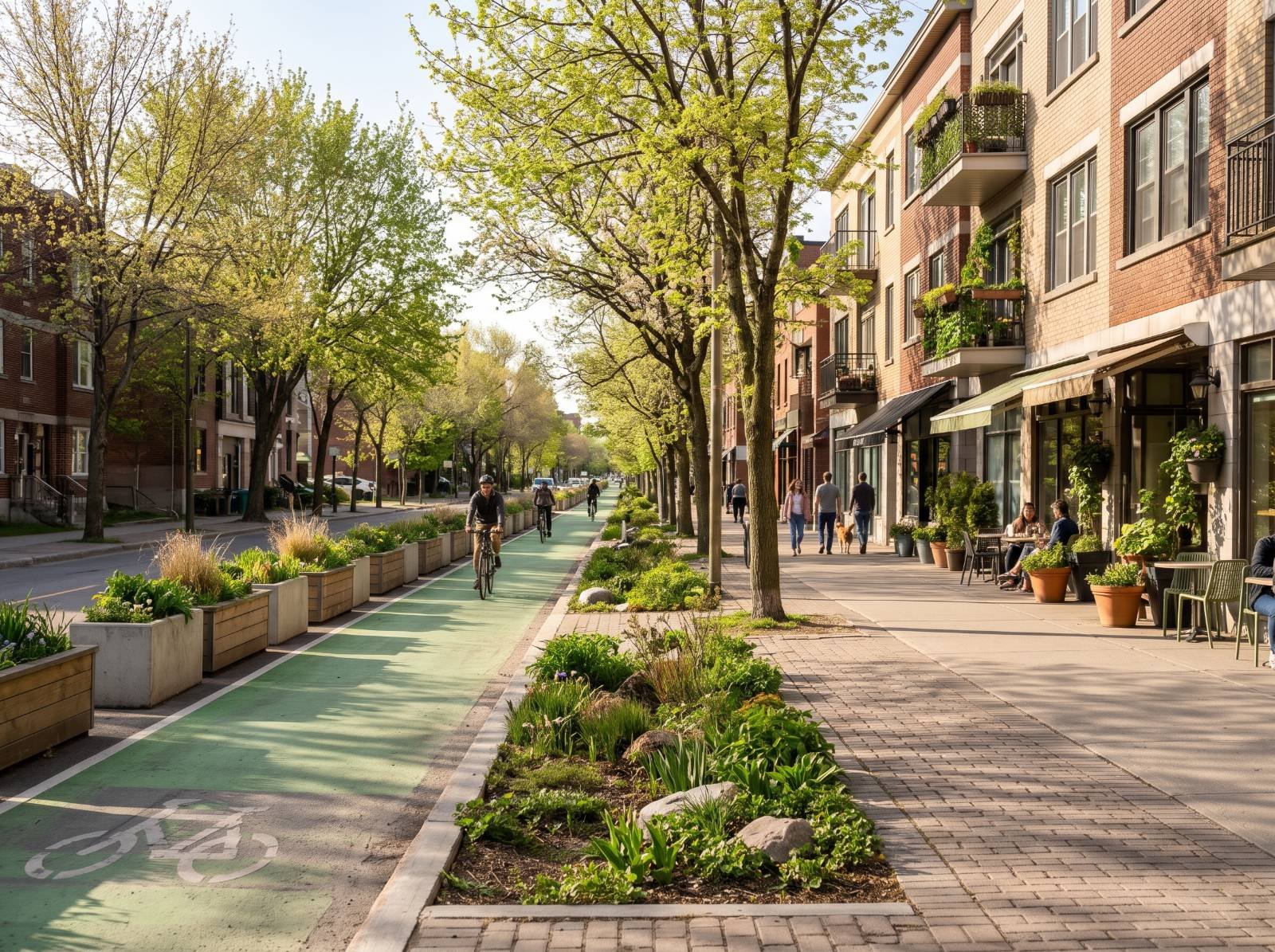
Many of the best sustainable urban planning ideas are practical and incremental. Communities redesign streets to include protected bike lanes and wider sidewalks, encourage housing and shops near transit stations, clean up and reuse former industrial sites, expand tree canopy in neighborhoods that lack shade, and update zoning codes to allow more housing types. Each change is modest on its own, but together they reshape how a community grows.
Building a Career in Sustainable Planning
Sustainability touches nearly every planning specialty. The American Planning Association lists specializations including environmental and natural resources planning, hazard mitigation and disaster recovery, transportation, and housing, all of which involve sustainability work. Planners in these areas work for local governments, regional agencies, consulting firms, and nonprofit organizations.
To learn more about the field, read What Is Urban Planning? and our guide to what urban planners do each day. Our Curriculum & Coursework page describes what planning students study, and you can explore schools and degree options to find programs that match your interests.
Frequently Asked Questions
-
What is the difference between sustainable planning and smart growth?
The terms overlap. Smart growth refers to a specific set of development principles, such as mixing land uses and providing transportation choices. Sustainable planning is a broader goal that includes those principles along with climate resilience, resource conservation, public health, and social equity.
-
Is sustainable urban planning only for large cities?
No. Suburbs, small towns, and rural communities use the same ideas at a different scale, such as revitalizing a walkable main street, protecting farmland and open space, or planting trees and rain gardens to manage stormwater.
-
What is a 15-minute city?
It is a planning concept in which residents can reach most daily needs, such as groceries, schools, parks, and health care, within about a 15-minute walk or bike ride from home. It builds on long-standing ideas about mixed land uses and walkable neighborhoods.
-
What should I study to work in sustainable urban planning?
Most planners earn a degree in urban and regional planning, often at the master's level, and many programs offer concentrations or courses in environmental planning, transportation, or climate adaptation. Coursework in GIS, ecology, and public policy is also valuable.