

Choosing a college major is one of the first big decisions on the path to a career. For students who care about how neighborhoods, streets, parks, and housing come together, an urban planning degree offers a direct route into a profession focused on improving communities. Parents often have practical questions as well: what does the major involve, and where does it lead?
This guide explains what urban planning majors study, the skills they develop, how accreditation works, and what graduates can do with an urban planning degree.
What Is an Urban Planning Major?
An urban planning major is an undergraduate program that prepares students to understand and shape how communities grow. It combines elements of geography, public policy, design, economics, and environmental science, and it emphasizes applying that knowledge to real places and problems. Some programs use titles such as urban and regional planning, city planning, or urban studies and planning, and the focus can vary from design to policy to environment. Our Overview of Programs explains the main degree types, along with minors, dual degrees, and certificates.
What Do Urban Planning Majors Study?
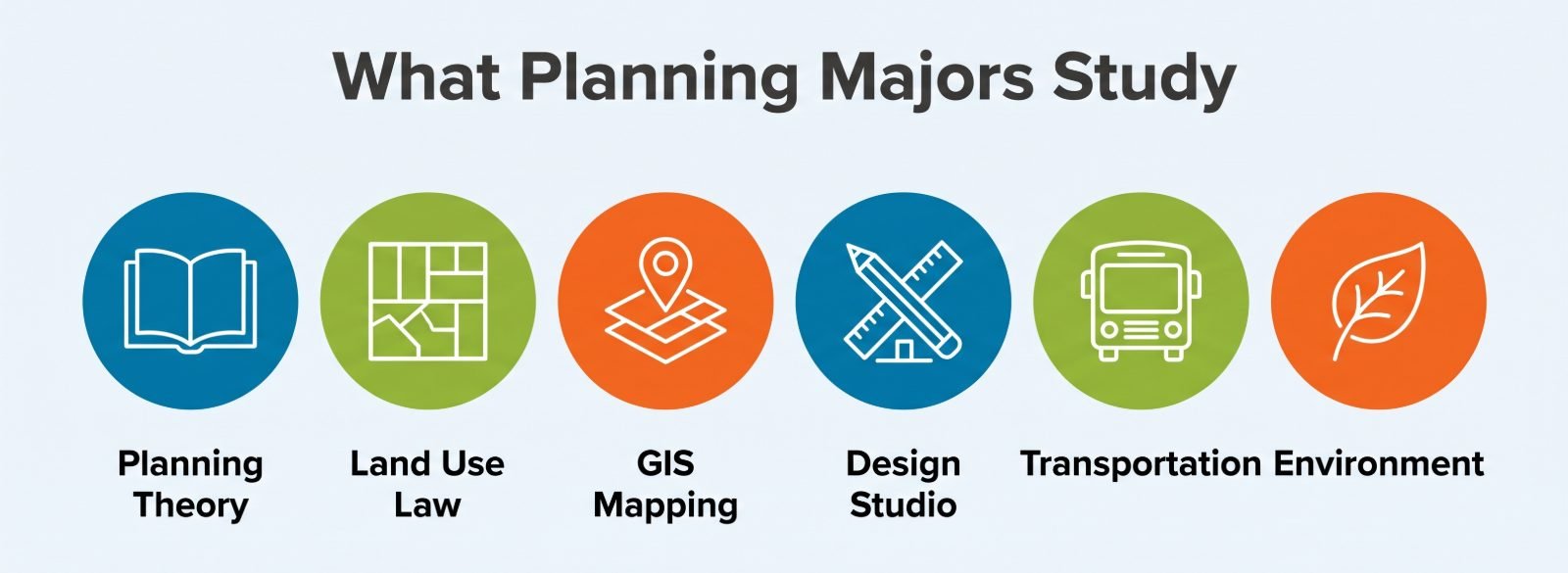
According to the U.S. Bureau of Labor Statistics, accredited planning programs typically include coursework in subjects such as planning theory, land use law, and GIS for planning. Most undergraduate programs also include:
- History and theory of cities: how communities have developed and how planning ideas have changed over time.
- Methods and data: statistics, demographic analysis, and mapping with geographic information systems.
- Studio courses: team projects in which students prepare plans for real sites or neighborhoods.
- Topic areas: courses in transportation, housing, environmental planning, and economic development.
Our Curriculum & Coursework page describes these subjects in more detail.
Skills You Build in an Urban Planning Degree

Planning education develops a balanced set of skills. The Bureau of Labor Statistics lists analytical, communication, decision-making, interpersonal, and leadership skills as important qualities for planners. In practice, students learn to analyze data and maps, write clearly for public audiences, present ideas to groups, and work on teams with people from different backgrounds. Studio projects, in particular, give students experience balancing the needs of residents, businesses, and the environment, which is the heart of professional planning.
Accreditation and Program Options
Accreditation signals that a program meets professional standards. The Planning Accreditation Board accredits bachelor's and master's degree programs in planning in North America and currently lists 80 accredited master's programs and 16 accredited bachelor's programs. Because accredited bachelor's programs are relatively few, many students major in a related field, such as geography, environmental studies, public policy, or architecture, and add a planning minor or certificate before pursuing a planning master's degree.
What Can You Do With an Urban Planning Degree?
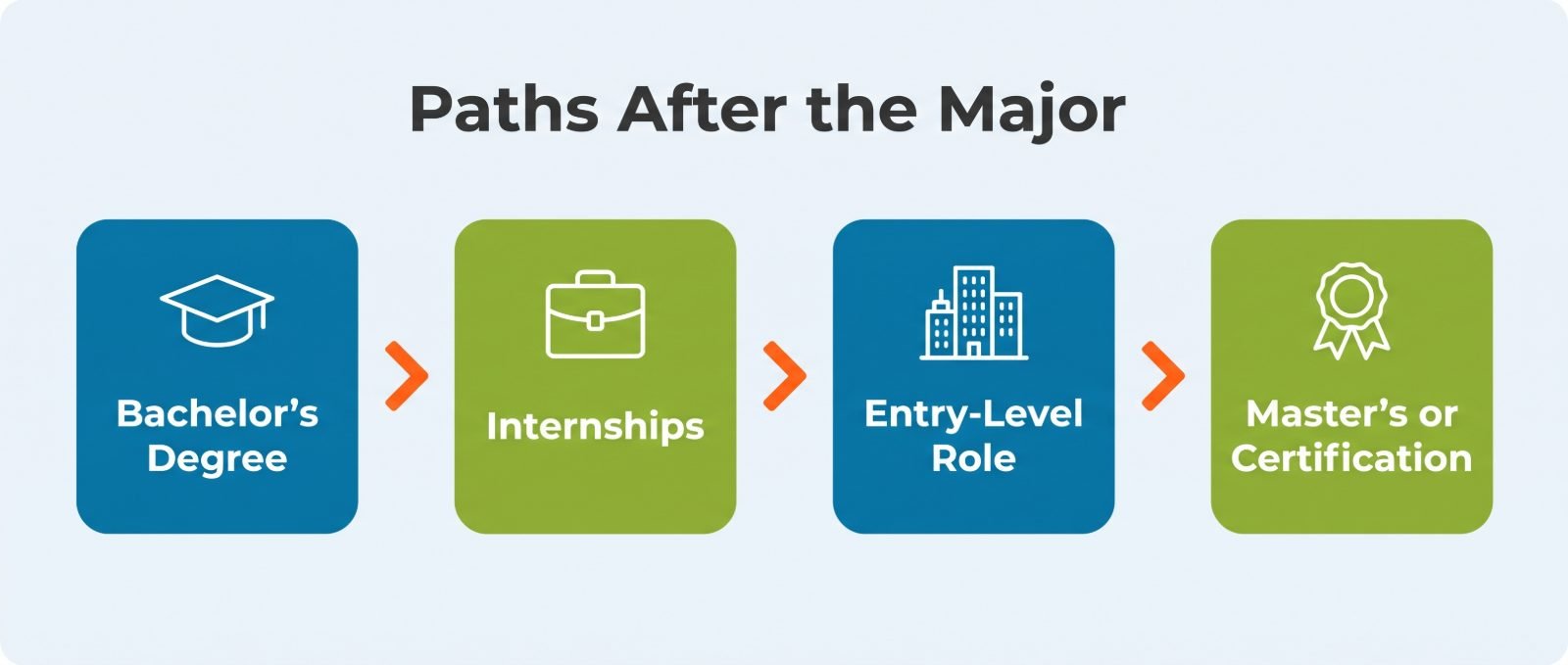
The Bureau of Labor Statistics reports that planners typically need a bachelor's or master's degree from an accredited planning program to enter the occupation, and that a master's degree is the typical entry-level education. Graduates with a bachelor's degree often begin in assistant or technician roles, or in related fields such as GIS, community development, or transportation, while building experience through urban planning internships. Many later earn a master's degree to advance. Our guides to urban planning jobs and urban planner salaries explain where planners work and what they earn.
Is Urban Planning the Right Major for You?
Urban planning suits students who are curious about how places work, enjoy both data and design, and want a career with visible public impact. If that describes you, compare programs by their curriculum, accreditation, studio opportunities, and internship connections. You can explore schools and degree options across the United States and Canada to find the right fit.
Frequently Asked Questions
-
Is urban planning a professional degree?
Yes, when it is earned through an accredited program. The Planning Accreditation Board accredits professional planning degrees at both the bachelor's and master's levels, and the master's degree is the most common professional credential in the field.
-
Do you need an urban planning bachelor's degree to earn a planning master's?
No. According to the Bureau of Labor Statistics, master's programs usually do not require a specific undergraduate major, although a background in architecture, social science, business, or a related field can help.
-
Is urban planning a hard major?
It is demanding in a different way than many majors. Students balance quantitative work, such as statistics and GIS, with writing, design, and group projects. Students who enjoy variety and solving real-world problems often find the workload engaging.
-
Can you minor in urban planning?
Many programs offer an urban planning minor or certificate that students can pair with majors such as geography, environmental studies, economics, or architecture. A minor is a useful way to explore the field before committing to a full degree.