

For many people interested in planning, the question is not whether to study the field but how far to take it. A master's in urban planning requires a real investment of time and money, so it is worth asking what the degree delivers in return. The answer depends on your background, your goals, and the kind of planning career you want.
This guide explains what a planning master's involves, why it is so common in the profession, how it affects certification and pay, and how to decide whether it is the right step for you.
What Is a Master's in Urban Planning?
A master's in urban planning is a graduate professional degree that prepares students for planning practice. Programs go by several names, including Master of Urban Planning, Master of City and Regional Planning, and Master of Urban and Regional Planning. Most full-time programs take about two years and combine core courses in planning theory, methods, and law with a specialization such as transportation, housing, environmental planning, or economic development. Many also include studio projects, a capstone or thesis, and an internship.
The Planning Accreditation Board currently lists 80 accredited master's programs in planning in North America, compared with 16 accredited bachelor's programs.
Why Many Planners Earn a Master's Degree
In planning, the master's degree is the standard professional credential. According to the U.S. Bureau of Labor Statistics, a master's degree is the typical entry-level education for urban and regional planners, and most planners hold a master's degree in urban and regional planning or a related field. Graduate programs also welcome students from many undergraduate majors, which makes the master's a common entry point for people who discover planning after earning a bachelor's degree or later in their careers.
Weighing the Costs and Benefits
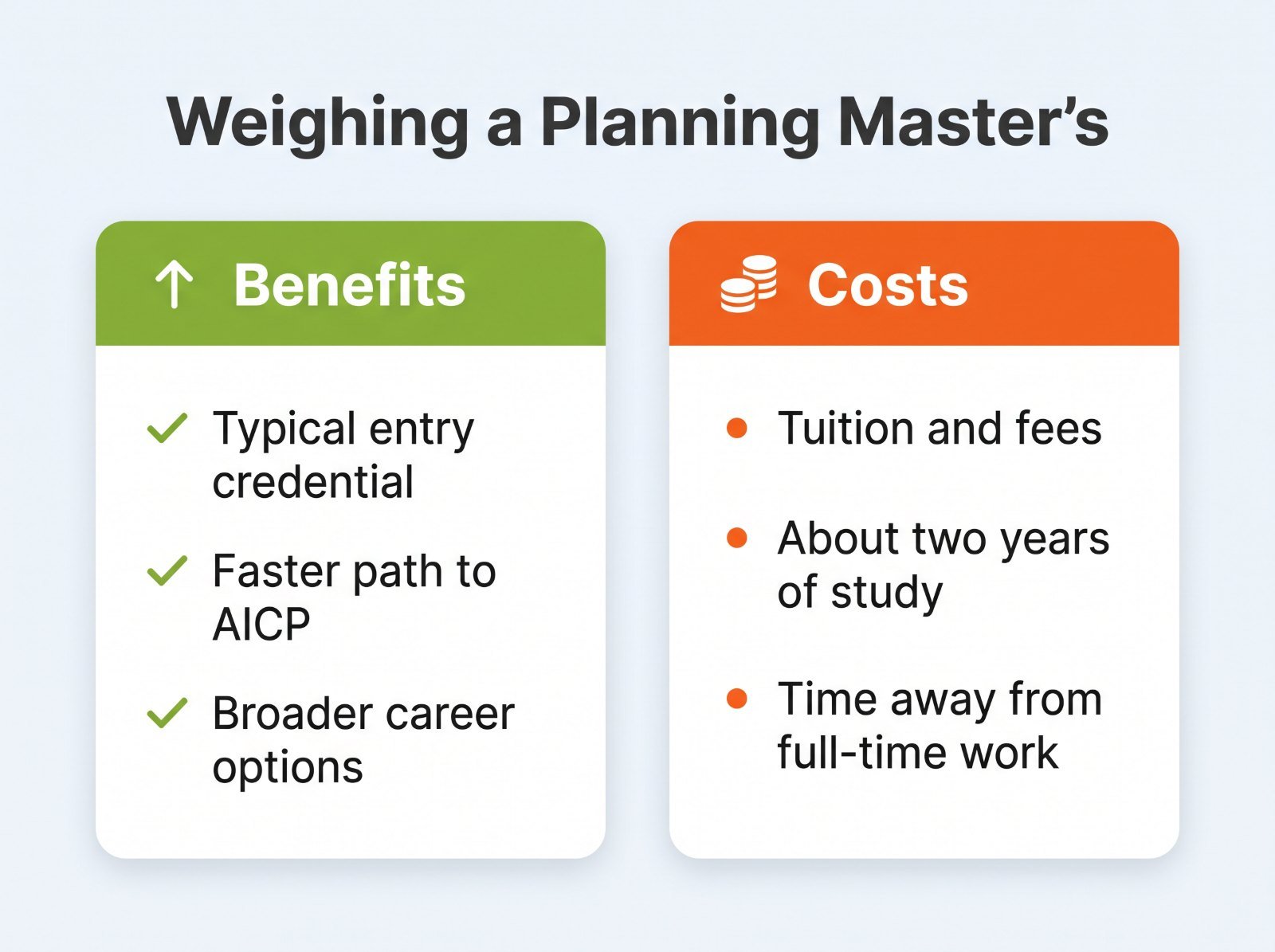
The main costs are tuition, living expenses, and roughly two years of reduced earnings while in school. These vary widely by program and location, and many programs offer graduate assistantships, scholarships, or fellowships that reduce the cost. Our Frequently Asked Questions page explains how assistantships typically work.
The benefits are both practical and long-term. A master's opens doors to positions that list a graduate degree as a requirement or preference, shortens the path to professional certification, and provides a network of classmates, faculty, and alumni who work across the field.
How a Master's Affects Certification and Pay
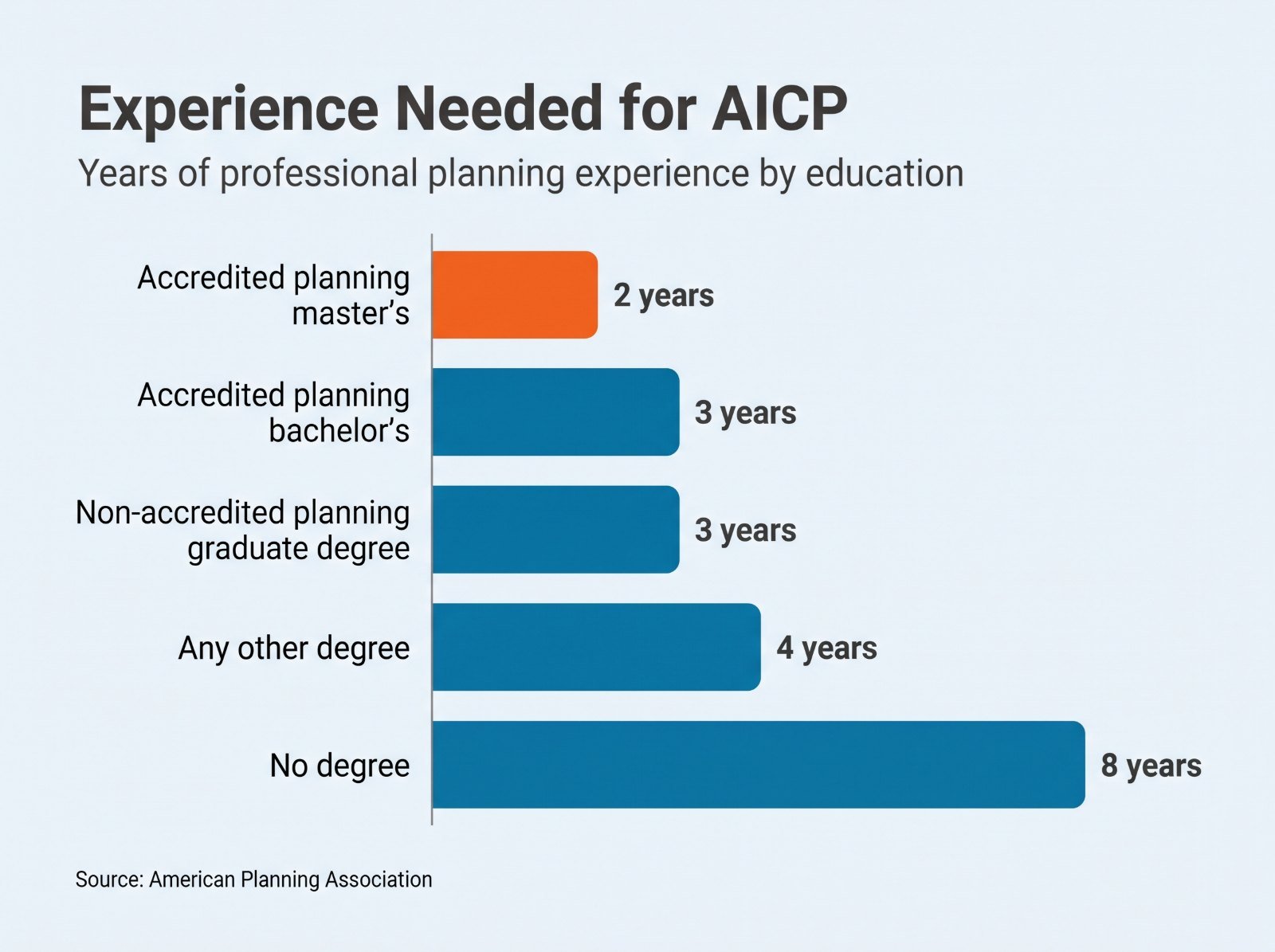
Professional certification through the American Institute of Certified Planners (AICP) requires a combination of education and experience. According to the American Planning Association, candidates with a master's degree from an accredited planning program need two years of professional planning experience, compared with three years for an accredited planning bachelor's degree and four years for most other degrees.
Certification, in turn, is associated with higher pay. As our guide to urban planner salaries explains, respondents to the association's 2025 salary survey who held AICP certification reported earning about 31 percent more, on average, than those without it. Earnings also rise with experience and responsibility, and a master's degree often makes it easier to move into senior and leadership roles.
Who Benefits Most From a Planning Master's?
A planning master's is often most valuable for three groups: students who majored in a related field and want to enter planning, career changers moving into the profession from other work, and early-career planners who want to advance into project management or specialized roles. Students who already hold an accredited planning bachelor's degree may choose to work for a few years first, gaining experience and clarity before deciding whether a graduate degree fits their goals. Some employers also offer tuition support for staff pursuing graduate study.
How to Compare Master's Programs

When comparing programs, consider accreditation, available specializations, studio and internship opportunities, faculty expertise, funding options, and total cost. Our Overview of Programs explains the different degree formats, including dual degrees and accelerated options, and you can explore schools and degree options across the United States and Canada to compare programs side by side.
Frequently Asked Questions
-
How long does a master's in urban planning take?
Most full-time programs take about two years. Some programs offer part-time schedules for working professionals, and accelerated options can shorten the timeline for students who begin graduate coursework during their undergraduate studies.
-
Can you earn a master's in urban planning online?
Yes, some programs offer online or hybrid formats. If professional certification is a goal, check whether the program is accredited by the Planning Accreditation Board, since accreditation affects how much experience AICP requires.
-
Do you need work experience before applying?
Usually not. Many students enter a planning master's program directly after earning a bachelor's degree, while others apply after several years of work. Relevant experience can strengthen an application, but it is rarely required.
-
Is a dual degree worth considering?
It can be for students with clear interests that span two fields. Dual degrees pair planning with fields such as law, public policy, architecture, or public health, usually in less time than earning both degrees separately.